
Interesting Facts About Lewis Hamilton: Records, Championships, Teams, and Career Milestones in Formula 1
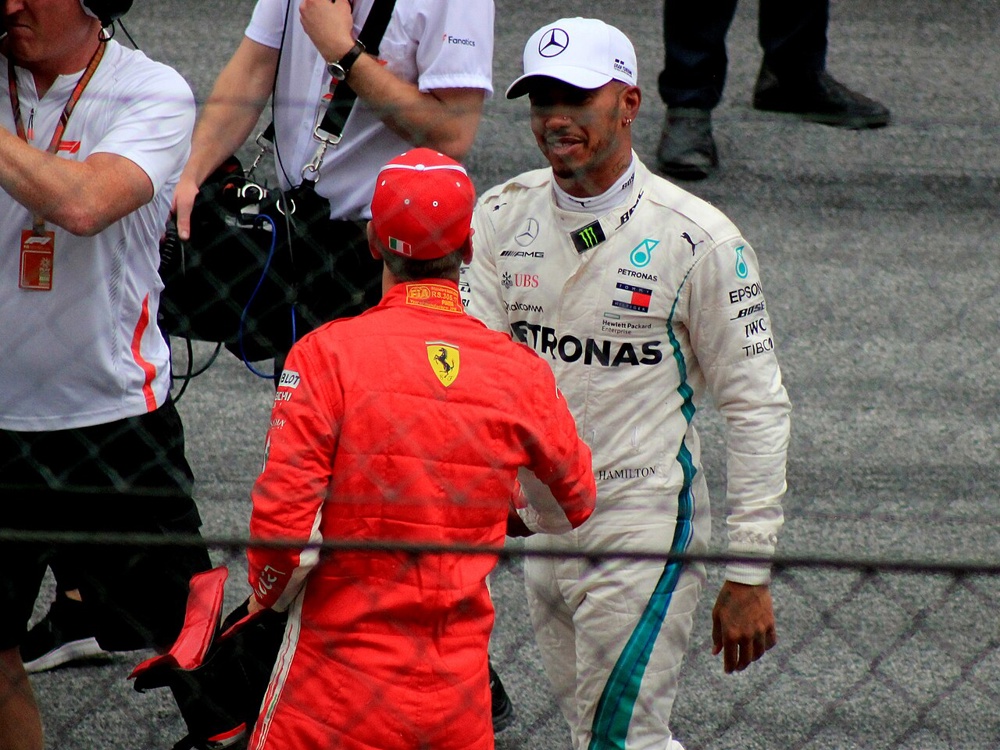
If you're looking for the most decorated driver in Formula 1 history, Lewis Hamilton is your answer. He holds 7 World Championships, 105 wins, 104 pole positions, and 183 podiums — records no one else can claim. He's raced for McLaren, Mercedes, and now Ferrari, building a legacy that's reshaped the sport entirely. Stick around, because the full story behind these numbers is even more impressive than they look.
The Breakthrough: A Rookie Season That Changed Expectations
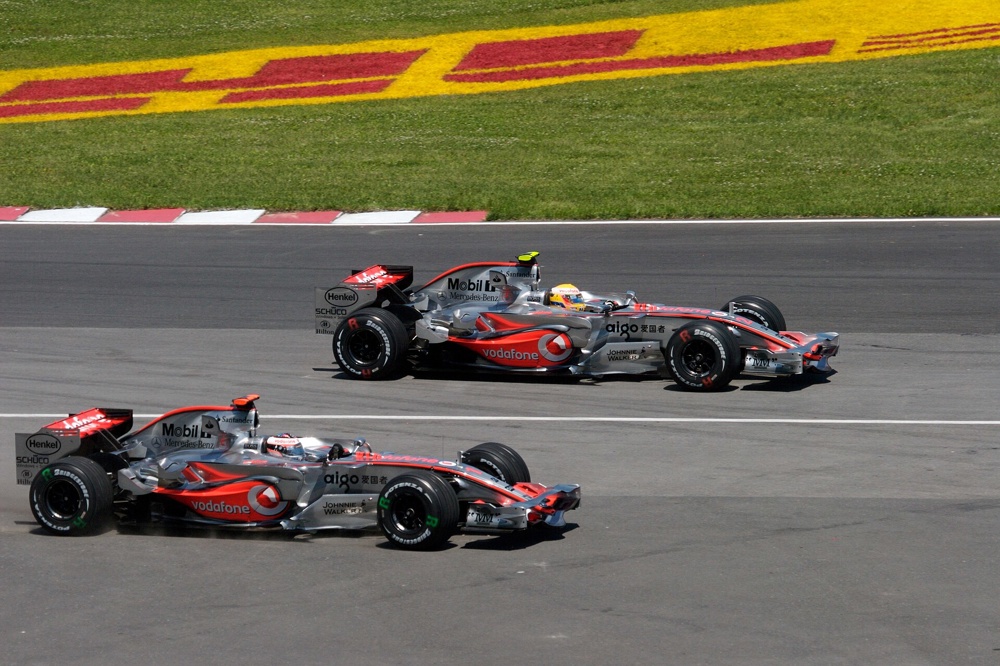
Hamilton’s entry into Formula 1 in 2007 didn’t follow the usual trajectory. Most rookies spend years adapting, learning the pace of the sport, and gradually building toward competitiveness. Hamilton did the opposite.
From his very first race with McLaren, he was fighting at the front, finishing on the podium and immediately challenging established champions. By the end of his debut season, he had come within a single point of winning the world championship—something virtually unheard of for a rookie. That near-miss set the tone for what followed.
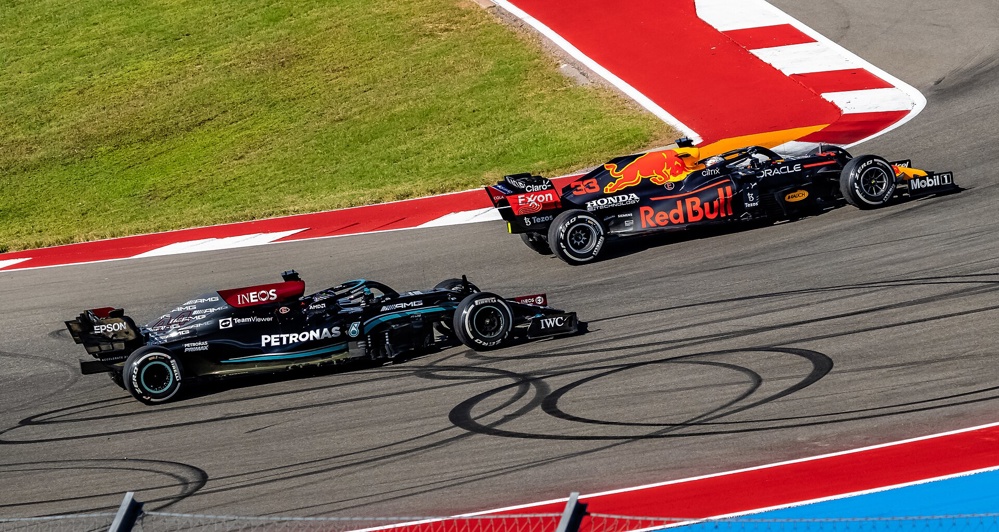
In 2008, Hamilton returned stronger, clinching his first world title in one of the most dramatic finishes in F1 history. On the final lap of the final race in Brazil, he secured the position he needed at the last possible moment, turning a near-loss into a defining victory. It wasn’t just a championship. It was a statement.
.jpg)
The All-Time F1 Records Only Hamilton Holds
Lewis Hamilton isn't just one of Formula 1's greatest drivers—he's rewritten the record books in ways no other driver has matched. He holds the all-time record for the highest leading percentage of races, having led at least one lap in 54.3% of his 346 races.
He's also set the benchmark for consecutive races with a lap led, stringing together an unbroken run from the 2014 Hungarian Grand Prix to the 2015 British Grand Prix. Beyond that, he's led more laps than anyone in F1 history—5,470 in total—and covered a staggering 27,000,865 km out front.
These aren't just numbers; they reflect a driver who doesn't just compete at the front but dominates there with remarkable consistency across nearly two decades. He also holds the record for most career points scored in Formula 1 history, accumulating 3,758 points throughout his career.
Put your knowledge to the test with more fun racing trivia.
How Many Championships Has Lewis Hamilton Won?
When it comes to championship glory, Hamilton's record stands as one of sport's most remarkable achievements. Seven Formula 1 World Drivers' Championship titles, tying Michael Schumacher's all-time record. He secured these in 2008, 2014, 2015, 2017, 2018, 2019, and 2020.
You can appreciate his dominance better when you look at career statistics beyond just championships. His 2019 season alone produced 413 career points, beating second place by 87 points, while his 2017 title run included 11 pole positions and 13 podiums.
Considering how long Hamilton's records may last, his combination of consistency across McLaren and Mercedes makes his achievements particularly hard to surpass. His first title in 2008 made him the youngest F1 World Champion at the time, and he's never stopped building on that legacy. His fourth championship in 2017 made him the most successful British F1 driver in history, drawing level with both Vettel and Prost in the all-time standings.

Every F1 Team Hamilton Has Raced For
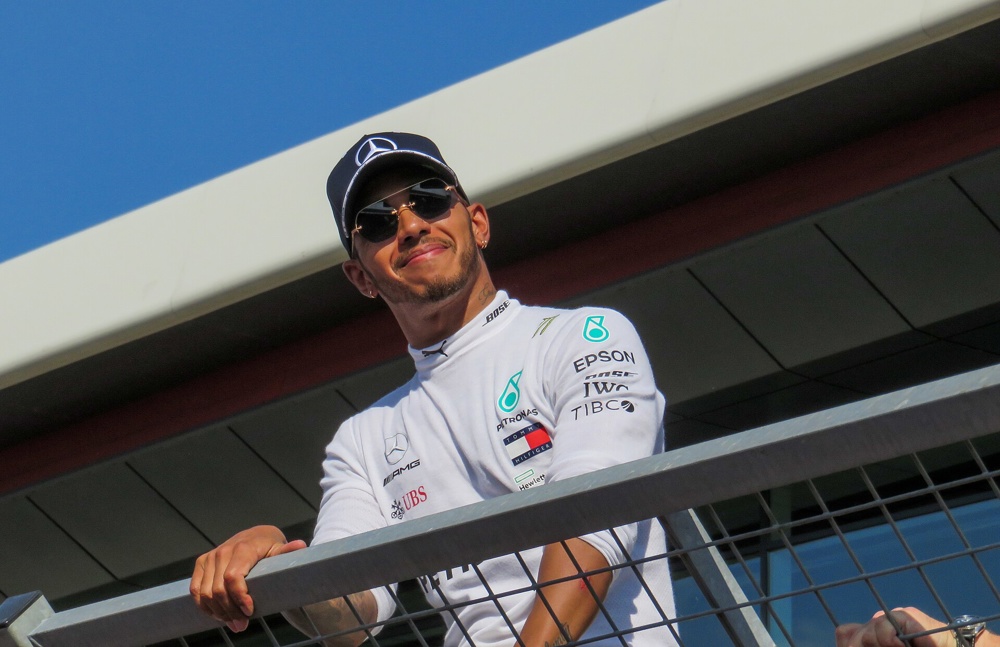
Behind those seven championship titles are three teams that shaped Hamilton's career in distinctly different ways. Understanding each F1 team Hamilton has raced for reveals how Hamilton's team loyalty throughout his career evolved strategically rather than sentimentally.
| Team | Key Highlights |
| McLaren (2007–2012) | 1 championship, 16 wins |
| Mercedes (2013–2024) | 6 championships, 105+ wins |
| Ferrari (2025–present) | 0 wins, 6 podiums |
He spent six seasons at McLaren, where he debuted in 2007 and claimed his first title in 2008. Mercedes became his most successful home across twelve dominant seasons. Now at Ferrari, he's chasing glory with a new machine, fulfilling a childhood dream while adapting to one of motorsport's most iconic teams. His contract with Ferrari runs until at least 2026, marking a bold late-career move that few anticipated given his long-standing success with Mercedes.
How Hamilton's 7 Titles Changed the Record Books
Seven titles don't just make Hamilton the greatest of his era — they rewrote F1's record books entirely. His unprecedented title dominance accessed statistical supremacy beyond 7 titles that no driver had approached before.
When Hamilton clinched his seventh at the 2020 Turkish Grand Prix, the numbers cascaded into history:
- Most wins climbed to 94, eventually reaching 105
- Most pole positions hit 97, later extending to 104
- Most podiums surpassed 163, ultimately reaching 183
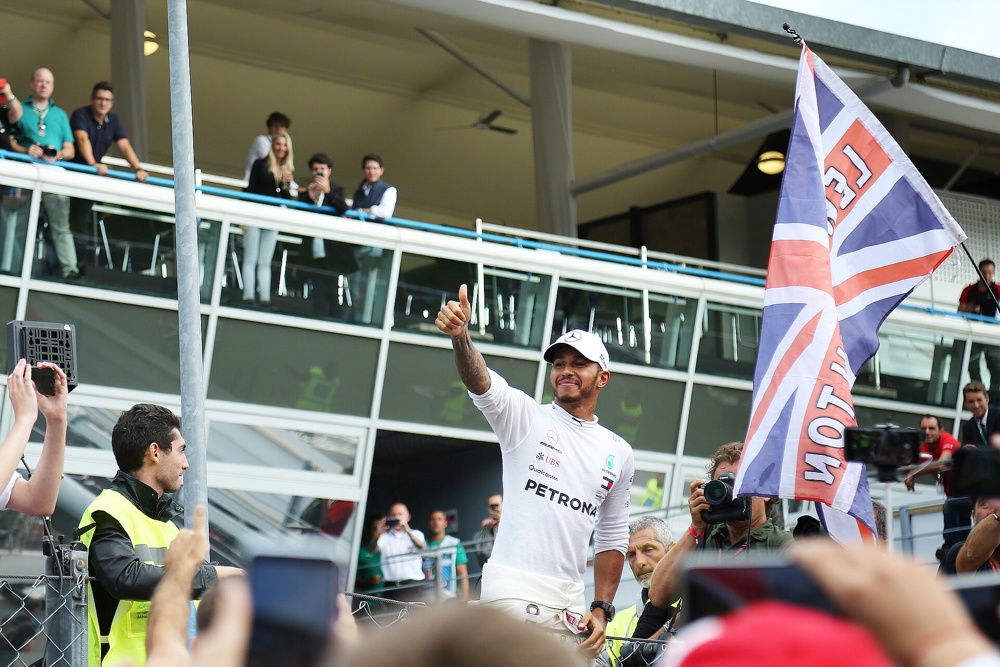
His records don't stop at championships. He holds 126 races as championship leader, 5,488 laps led, and 176 front-row starts. Spanning 12 years between his first and last titles, Hamilton didn't just match Schumacher — he made those records feel permanent. Hamilton also holds the record for most points scored in Formula 1 history, amassing an extraordinary 3,728 points across his career.
.jpg)
The Moments That Cemented Hamilton's Place in F1 History
Few careers in sport contain moments as consistently historic as Hamilton's. You can trace his record breaking championship dominance through milestones that reshaped F1's record books entirely, establishing his place among F1 legends.
Three moments stand above the rest:
- 2008 Brazilian Grand Prix — His maiden title, clinched dramatically on the final corner of the final lap.
- 2020 Turkish Grand Prix — His seventh championship tied Schumacher's all-time record.
- 2021 Russian Grand Prix — He surpassed 100 career pole positions, becoming the first driver in history to reach that mark.
Each breakthrough didn't just add a trophy or statistic. They redefined what's achievable in Formula 1, cementing Hamilton as the sport's most decorated driver across generations. He also made history as the first Black driver to compete in Formula 1, adding another layer of significance to his already groundbreaking career.
What Hamilton's Move to Ferrari Looks Like So Far
With those record-breaking milestones behind him, Hamilton shocked the motorsport world in early 2024 by announcing he'd leave Mercedes for Ferrari — a move few saw coming. The reasons behind the move trace back to two winless Mercedes seasons and Ferrari's notable progress heading into 2026's new engine regulations era.
Ferrari chairman John Elkann had long pursued Hamilton's signature, and the dream of racing in red proved impossible to resist. Ferrari partnerships are sky-high. Hamilton partnered Charles Leclerc starting with the 2025 Australian GP, replacing Carlos Sainz. He's already visited the factory, completed simulator work, and tested a 2023 Ferrari at Barcelona.
Now driving a 95% redesigned 2025 car, Hamilton enters this chapter hungry for another championship challenge. Hamilton's last drivers' title with Ferrari would make him the first driver to win championships with three different teams since Juan Manuel Fangio in 1957.
_(cropped).png)
Why Hamilton's Numbers Make Him the Greatest in F1
When you stack Hamilton's career numbers against anyone else in Formula 1 history, the case for his greatness becomes impossible to dispute. His statistical domination spans every measurable category, and his consistent excellence across 18 seasons leaves no room for debate.
Consider these career benchmarks:
- 105 Grand Prix victories with a 27.6% win rate across 380 starts
- 104 pole positions representing 27.4% of all career starts
- 7 World Championships matching Schumacher's all-time record
You're looking at numbers that don't just define a generation — they redefine what's possible in Formula 1. His journey to the top began remarkably early, having approached McLaren boss Ron Dennis at just 10 years old to express his desire to race for the team.
The Pressure of Longevity in a Changing Sport
Sustaining excellence in Formula 1 isn’t just about talent—it’s about endurance. Hamilton’s career has stretched across multiple generations of drivers, each bringing new styles, technologies, and approaches to the sport. Remaining competitive in that environment requires constant adaptation, both mentally and physically.
Younger drivers arrive with fresh aggression, new training methods, and a different relationship with media and technology. What makes Hamilton’s longevity remarkable is not just that he’s still present—it’s that he continues to contend.
Even as the competitive landscape shifts, he remains relevant, adjusting to new regulations, evolving team dynamics, and the relentless pace of the sport. In a discipline where careers can fade quickly, longevity itself becomes a measure of greatness.

The Influence on the Next Generation of Drivers
Hamilton’s impact is also visible in the drivers who have followed him. Younger racers entering Formula 1 today are doing so in a sport that looks different because of his presence. Representation, visibility, and the idea that a driver can have a voice beyond racing have all become more normalized.
Many of today’s drivers are not just competitors—they are personalities, advocates, and brands. That model didn’t appear in isolation. It was shaped, in part, by Hamilton’s approach to his career. His influence extends beyond records. It’s reflected in how the next generation defines success—not just by wins, but by presence and impact.
Conclusion
Lewis Hamilton’s career can be measured in championships, wins, and records—but those numbers only tell part of the story. What truly defines his legacy is how he combined performance with influence, consistency with evolution, and success with cultural impact.
He entered Formula 1 as a prodigy, became its most dominant driver, and evolved into one of its most significant figures. And even now, his story isn’t finished. Because in Formula 1—as in culture—true legacy isn’t just about what you achieve. It’s about what you change along the way.